It is not that one is stronger than the other: they are different concentrations of the same drink. And there is a surprise about caffeine that contradicts what almost everyone believes.
Pressure against gravity
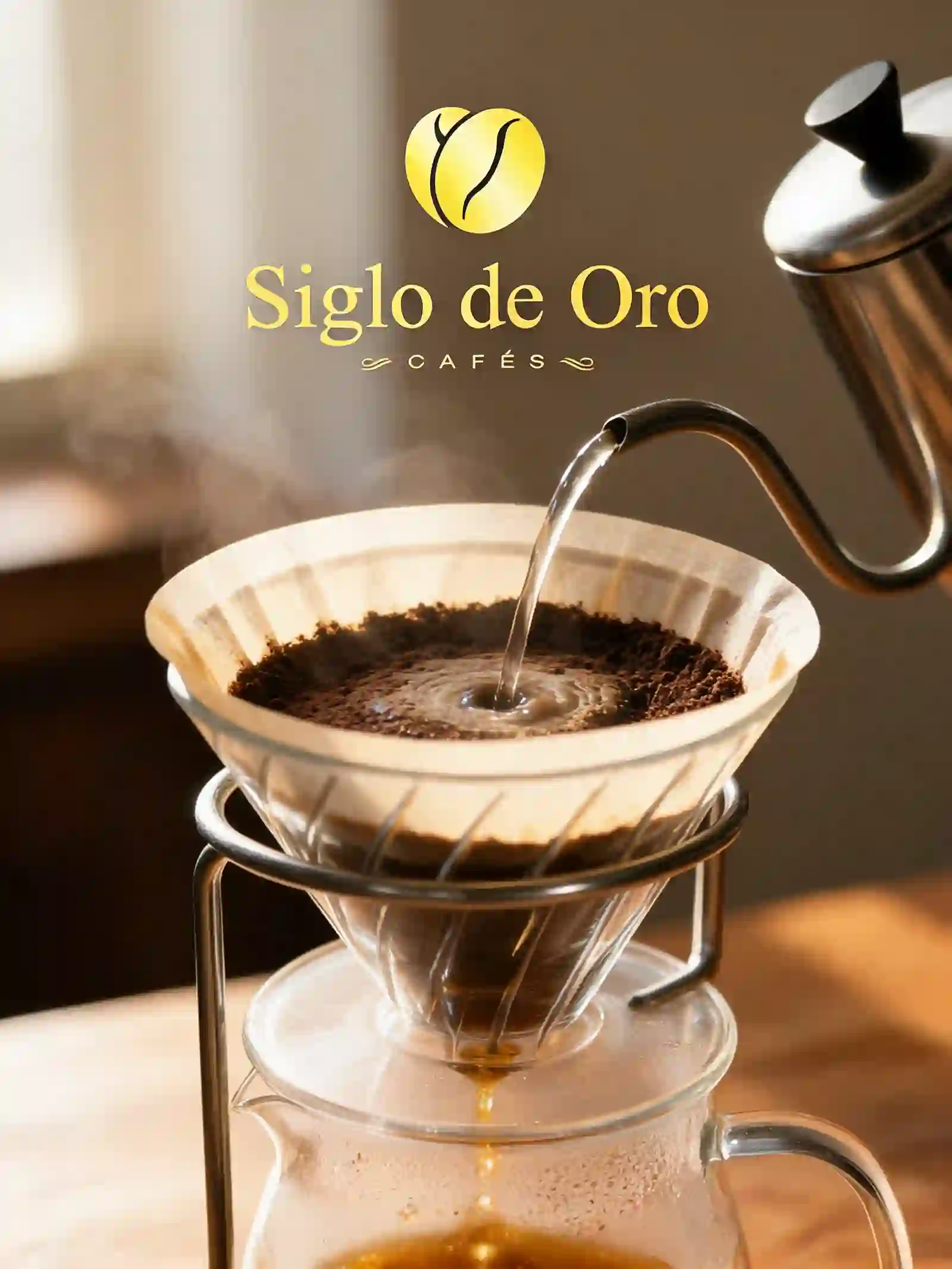
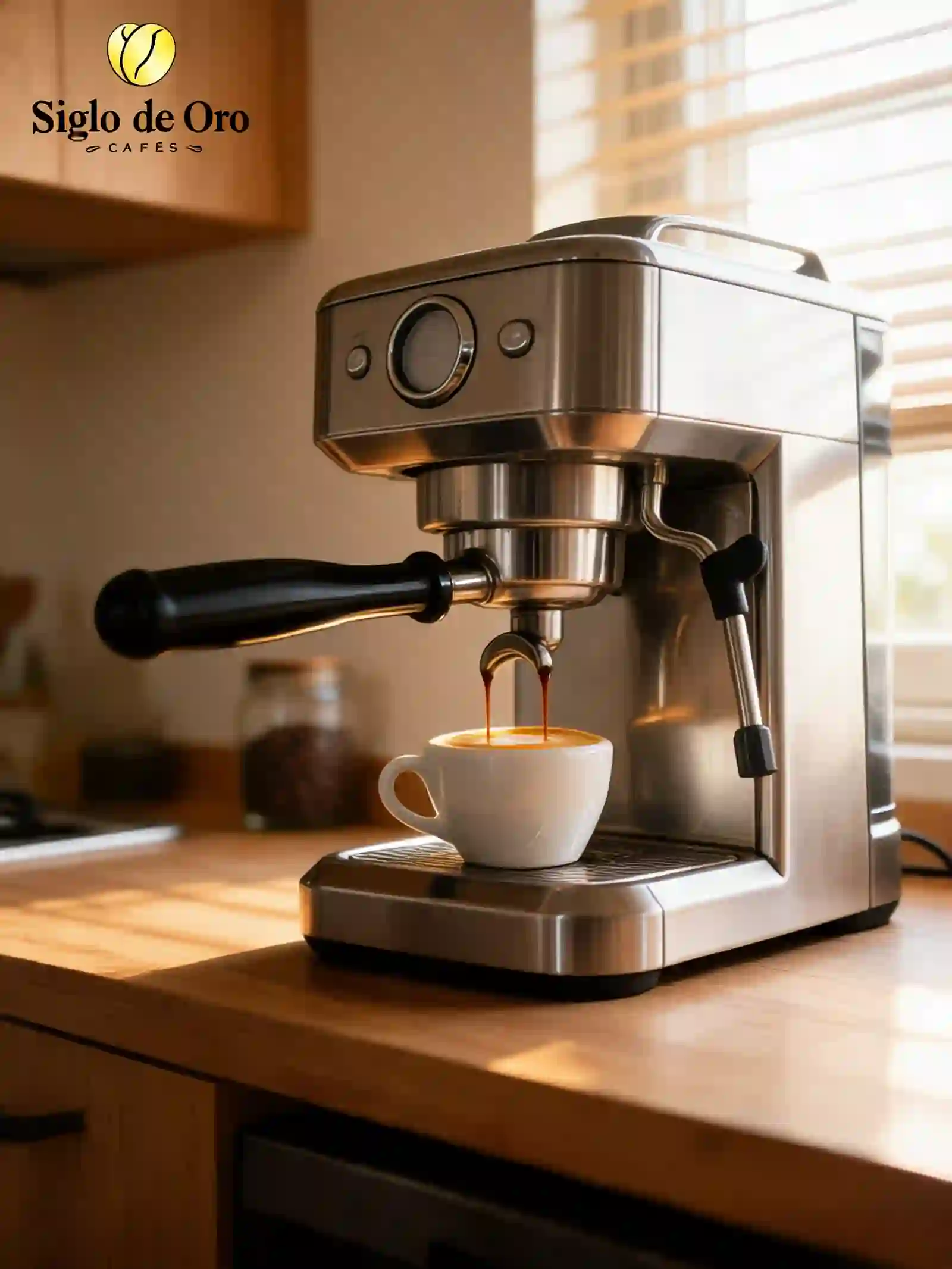
Espresso pushes water at around 9 bar through a compacted puck of very finely ground coffee, in 25-30 seconds. Filter lets water pass by gravity through a coarser bed for three or four minutes.
Everything else follows from that difference. They aren't two qualities of coffee: they're two ways of dissolving it.
What genuinely separates them: concentration
People say espresso is "stronger". The precise version is that it's far more concentrated.
| Espresso | Filter | |
|---|---|---|
| Dissolved solids | 8-12 % | 1.2-1.5 % |
| Volume | 30-40 g | 200-300 g |
| Coffee-to-water ratio | 1:2 | 1:15 - 1:17 |
| Time | 25-30 s | 3-4 min |
An espresso carries roughly eight times more dissolved solids per sip. Which is why it's served in 40 millilitres and why it saturates the palate so quickly: that isn't flavour intensity, it's density.
The caffeine surprise
Almost everyone assumes espresso has more caffeine. Per millilitre, yes, vastly more. Per serving, usually not.
A double espresso uses around 18 g of coffee; a 300 ml filter cup uses between 18 and 20 g. Since caffeine is extracted almost completely by both methods, the total ends up similar — and often higher in filter, because of the serving size.
Espresso is a concentrated hit; filter is the same caffeine spread across twenty minutes of drinking.
If you're managing your caffeine, what counts is the grams of coffee you use, not the method. There's more in the article on caffeine.
Why the same coffee tastes different
The pressure and fine grind of espresso extract more oils and more fine particles held in suspension. That gives body, dense texture and emphasises the heavier notes: chocolate, nuts, caramel.
Paper filters retain a good deal of those oils and fines. What's left is a cleaner, more transparent cup where the lighter notes — floral, citrus, fruit — are easier to pick out. Nothing is lost, it's distributed differently.
Hence the rule of thumb nearly every roaster uses: if a coffee has a delicate, complex aromatic profile, filter shows it off better; if you want body and impact, espresso.
Which to choose in practice
Espresso if: you drink milk-based coffee (a cortado, cappuccino or latte needs a concentrated base or the milk swallows it), you're short of time in the morning, or you like coffee with body and punch.
Filter if: you like to sit with a coffee rather than dispatch it, you want to explore differences between origins, or you prefer something gentler on the stomach — espresso's higher concentration sits less comfortably with some people.
Neither wins. Plenty of people in specialty coffee keep both set up and choose according to the day and the bean.
And where does the moka pot fit?
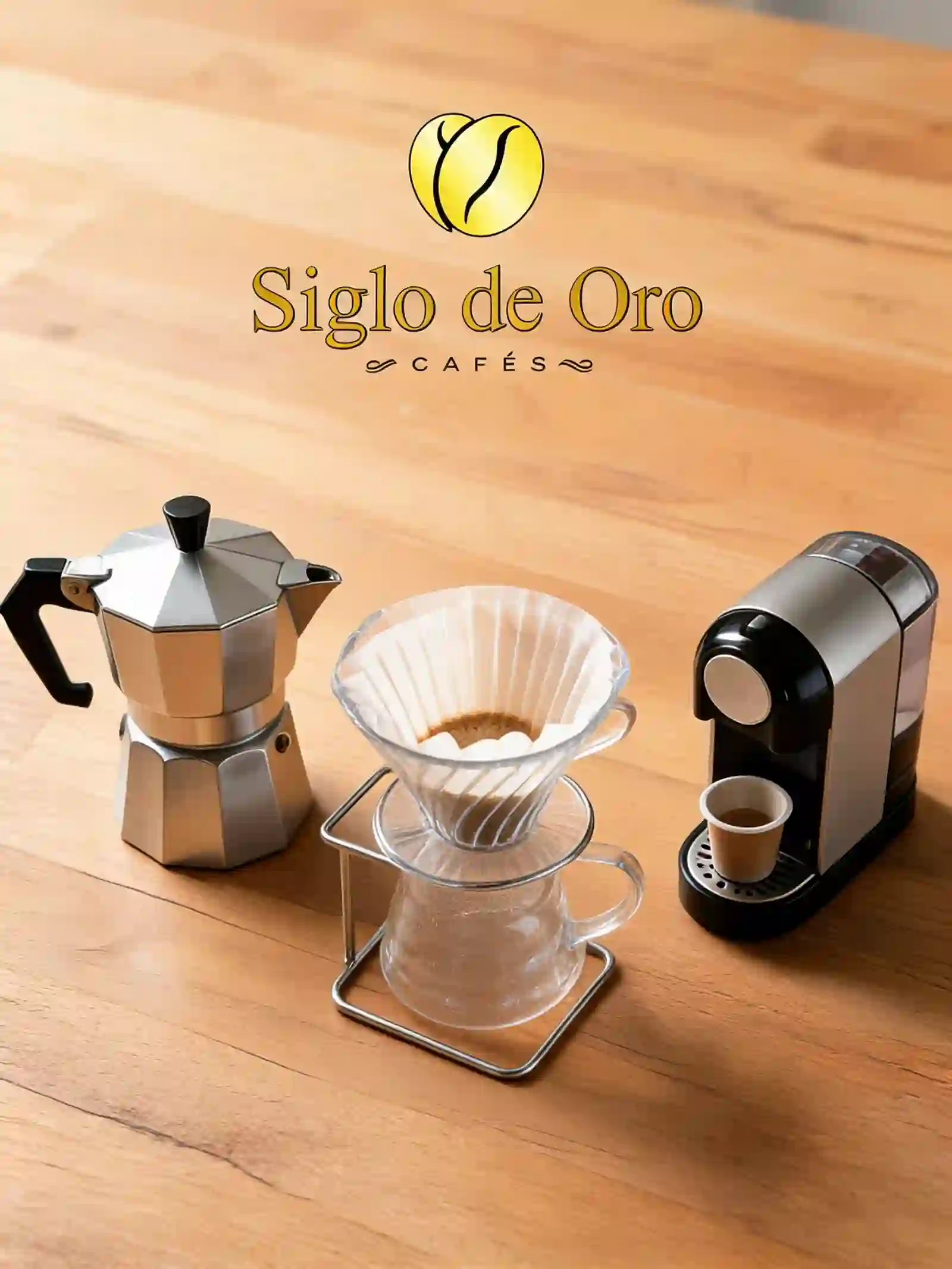
In between, and it deserves a mention because it's the most common coffee maker in Spanish homes. A moka works at 1.5-2 bar, a long way from espresso's 9, so technically it doesn't make espresso — but it does produce a fairly concentrated drink, around 5 % solids.
It's a perfectly respectable method with an undeserved reputation. It mostly turns out bitter because of two habits: filling the base with cold water (which drags out the heating and stews the coffee) and tamping the coffee into the funnel, which you should never do.
Which coffee suits each
Medium and medium-dark blends, like our Especial Bouquet, are built for espresso and moka: they give body, crema and hold up against milk.
Single origins with pronounced acidity, like our Colombia, show better as filter — V60, Chemex or drip — where the slower, cleaner extraction lets the fruit come through.
If you want to set up filter, start with the V60 guide. If you're going for espresso, the home espresso guide. And if you're still choosing equipment, we run through it in how to choose a coffee maker. Coffee for both is in the shop.