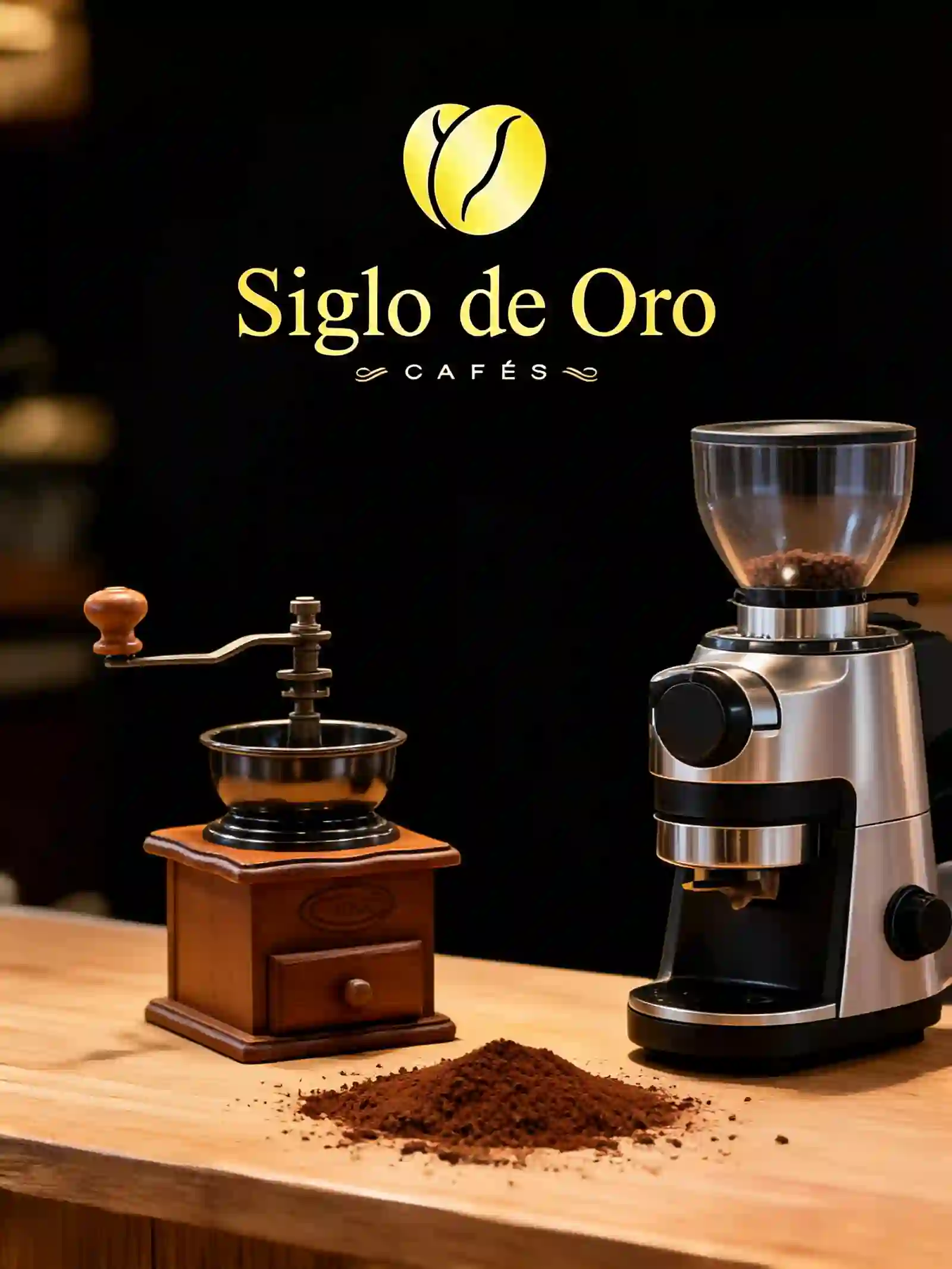

Whole bean wins, but not always: coffee ground by a professional beats beans destroyed by a blade grinder. Where exactly the line sits, and how to buy ground without losing as much.
What actually happens when you grind
A whole bean is a closed cellular structure holding oils and volatile compounds inside. Grinding breaks that structure open and multiplies the surface exposed to air several hundred times over.
The effect is immediate: a significant share of the aromatics is lost within the first few minutes after grinding. That's why ground coffee smells so intense when you open the grinder — that smell is literally aroma escaping, and it won't be in your cup.
In round numbers: whole bean holds up well for 2-3 weeks from roasting; the same coffee ground, 5 to 7 days.
The real dividing line: your grinder
Here's the nuance almost no article makes, and it's the one that actually decides.
Grinding at home only wins if you grind well. A blade grinder doesn't grind: it batters the bean apart, producing large fragments and dust simultaneously. In the same cup you end up with over-extracted particles (bitterness) and under-extracted ones (sourness and a watery taste). It's a fault no coffee maker compensates for.
Recently ground coffee from a professional, at the correct setting for your machine, gives a better cup than whole beans wrecked by a blade grinder. No argument.
So the decision isn't "beans or ground", it's:
- You have a burr grinder → whole bean, always.
- You have a blade grinder → buy ground, and consider replacing the grinder before the coffee machine.
- You have no grinder → ground, without any guilt.
The differences between types are in the grinder guide.
How to buy ground without losing as much
If ground it is, these four things recover much of the gap:
- Say what machine it's for. The correct grind differs radically between espresso, moka, filter and French press. A generic grind suits none of them.
- Buy smaller quantities more often. Ground coffee has half the useful life: two kilos is a worse deal than half a kilo.
- Make sure it was ground recently, not ground months ago and warehoused. Check the roast date again.
- Seal the bag properly and press the air out each time. It matters more here than with whole bean.
When ground is simply the better option
It isn't only a lesser evil. There are situations where it makes complete sense.
In an office, where nobody is going to grind and the noise would irritate. When travelling, where a grinder doesn't fit or isn't worth the space. And in households where several people make the coffee in a hurry: a well-matched grind gives consistent results without anyone having to learn anything.
We sell it both ways
It's the same coffee; the only difference is when it gets ground. If you have a grinder, order whole bean. If not, order ground and tell us your coffee maker so we can set the particle size.
To make it last as long as possible once home, the storage guide covers what genuinely works — including the freezer question, which goes against the usual advice. And to avoid the most common brewing mistakes, they're in the seven most frequent faults. Both formats are in the shop. And if you have a bean-to-cup machine, see which beans suit it in coffee for a bean-to-cup machine.