Not the fridge, but yes the freezer — which contradicts what you have read everywhere else. What degrades coffee, how long it really lasts, and why decanting it into a nice jar is a bad idea.
What spoils coffee
Four things, and it helps to know which weighs most:
- Oxygen. The main one by a distance. It oxidises the oils in the coffee and turns them rancid.
- Heat. Accelerates that oxidation. Like any chemical reaction, the rate climbs quickly with temperature.
- Moisture. Coffee is hygroscopic: it absorbs water from the air, and with it begins extracting before you're ready.
- Light. UV breaks down aromatic compounds. It's the least serious factor if the bag is opaque.
Ranked like that, it's clear where to attack: less air and less heat. The rest is secondary.
Leave the coffee in its bag
This surprises people who've just bought a beautiful airtight canister.
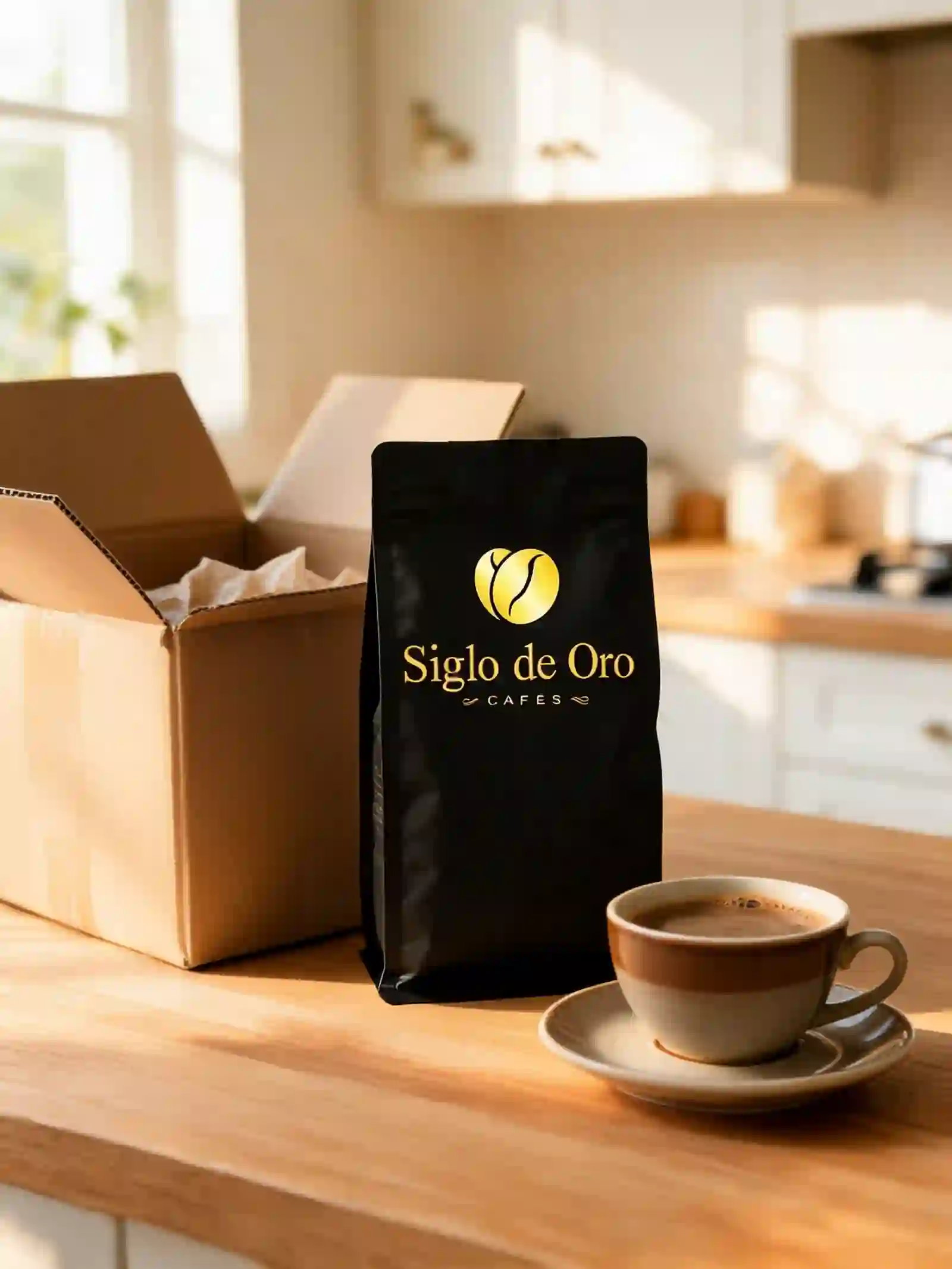
A decent coffee bag has a one-way valve — that plastic button on the side. It lets out the CO₂ the coffee gives off after roasting while keeping oxygen out. It is a piece of engineering aimed at exactly this problem.
Tip the coffee into a jar and you lose the valve and introduce all the air in the jar along with it. However well it seals, that air is now inside. The original bag, rolled down tightly with the air pressed out, usually keeps coffee better.
If you like the jar for the look of it, at least choose an opaque one in steel or ceramic, ideally with a valve. Clear glass is the worst of all options.
Never the fridge. The freezer, yes
Here we go against what nearly everyone says, so it's worth explaining.
The fridge is a bad idea for two reasons: every time you take the container out, cold coffee condenses moisture from the kitchen air, and that water degrades it; and coffee absorbs odours with remarkable ease, of which a fridge has plenty.
The freezer is a different matter, and research over recent years has made this reasonably clear: at freezing temperatures oxidation essentially stops, and coffee holds its aromatics for months. It does need doing properly:
- Freeze in small portions, roughly a week's worth. Freezer bags or small, well-filled containers.
- Don't freeze and thaw the same coffee repeatedly. Each cycle condenses moisture. Take a portion out, use it, and it doesn't go back.
- Grind straight from frozen. There's no need to let it come up to temperature, and cold beans actually fracture more evenly.
Cupboard for the coffee you'll drink this week. Freezer, in portions, for the kilo you bought and won't finish within the month.
Where to keep it if you don't freeze
A closed cupboard, away from the oven, the hob and the window. It sounds obvious, and yet the most common home for coffee is the cupboard directly above the hob, which is the worst spot in the kitchen.
If you live somewhere warm this counts for more than you'd think: in summer a kitchen can spend hours above 30 °C, and at that temperature the clock runs considerably faster than the generic figures you'll read elsewhere. We go into it in the article on specialty coffee in Almería.
How long it actually lasts
| Format | Best | Acceptable |
|---|---|---|
| Whole bean, sealed bag | 3-21 days from roast | Up to 2 months |
| Whole bean, opened bag | 2-3 weeks | 1 month |
| Ground, opened bag | 5-7 days | 2 weeks |
| Frozen in portions | Several months | Up to a year |
Note the top of that table: coffee is not at its best on roast day. It needs three to five days to degas; before that the CO₂ interferes with extraction and the cup comes out uneven. It's one of the few things where being in a hurry works against you.
The real answer: buy less, more often
All the storage discipline in the world only slows a decline. What actually works is not having old coffee in the house.
If you drink two espressos a day you'll get through about 500 g a month, so buying two kilos because the price was better means drinking the last of it four months after roasting. The saving is eaten by the loss in quality. Working out your real consumption is covered in the subscriptions article.
And if you buy ground, halve all those timings and buy smaller quantities — the numbers are in ground versus whole bean. Freshly roasted coffee is in the shop.