Cheap, indestructible and almost impossible to get wrong. Two recipes that work, the difference between standard and inverted, and why it does not make espresso even though it looks like it might.
What it is
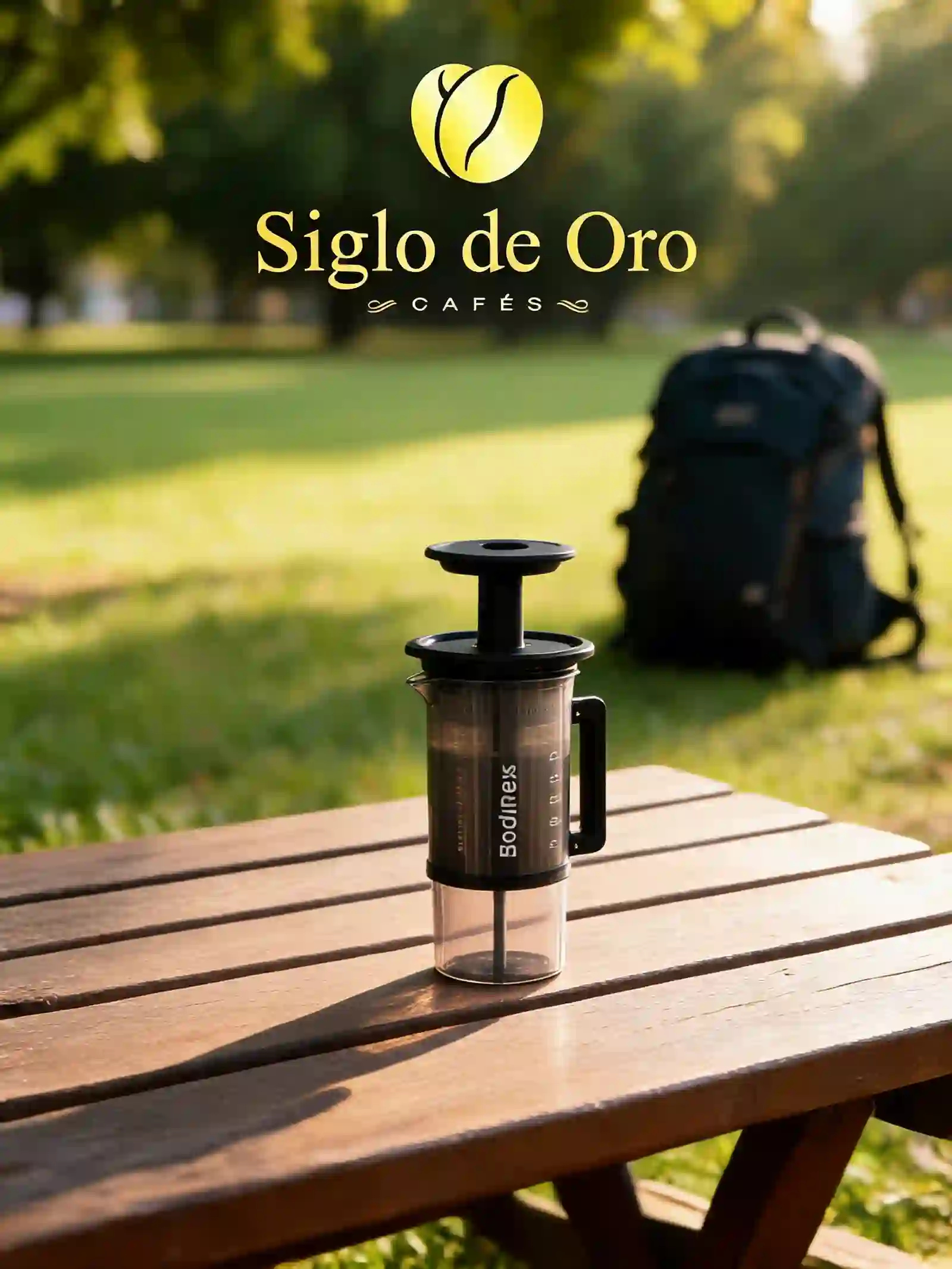
A plastic cylinder with a plunger, invented in 2005 by Alan Adler — a Stanford engineer, and before this best known for designing the Aerobie flying ring. It costs around €35, has no electronics, won't break if dropped and fits in any corner of a suitcase.
It combines immersion, like a French press, with a final push under pressure. That mixture makes it very tolerant: it's hard to produce a genuinely bad cup.
It doesn't make espresso
You'll read that constantly and it's worth clearing up. The pressure you can apply with your arm is around 1 to 2 bar; espresso needs about 9. What comes out of an AeroPress is a concentrated coffee, closer to a strong moka than to espresso, and with no real crema.
It works perfectly well as a base for a milky coffee, but don't expect crema like a portafilter machine's.
Standard versus inverted
Standard: the cylinder sits on the cup, filter at the bottom. Simple, but it starts dripping as soon as you add water, so the steep time isn't exact.
Inverted: assembled upside down, with the plunger at the bottom acting as a base, you steep for as long as you like and then flip it onto the cup to press. Total control of the timing, at the cost of a flipping manoeuvre best done over the sink the first few times.
To start with, standard is fine. If you get into it, you'll end up inverted.
Two recipes that work
Smooth and balanced (normal cup)
- 15 g of coffee, medium grind, as for filter.
- 230 g of water at 90 °C.
- Stir for 10 seconds, steep for 1 minute 30.
- Press slowly, over about 30 seconds.
Concentrated (to lengthen with water or milk)
- 18 g of coffee, medium-fine grind.
- 100 g of water at 88 °C.
- Steep for 1 minute, press over 20 seconds.
- Lengthen afterwards with 100-150 g of hot water.
Always press calmly. If you meet a lot of resistance, the grind is too fine: back it off a notch next time.
Paper or metal
The paper filter it ships with gives a clean cup with no sediment, retains the oils, and can be rinsed and reused several times.
Metal filters, bought separately, let oils and some fines through: more body, slightly less clarity. For travel they have the obvious advantage of no refills to carry.
Why it's the best travel method
It doesn't break, weighs little, cleans in ten seconds — the coffee puck ejects with one push and you rinse it — and needs only hot water, which you can find in any hotel, campsite or borrowed kitchen.
What is worth carrying is pre-ground coffee in a sealed bag, or a hand grinder, which takes little space and makes a large difference.
The world championship
There has been a World AeroPress Championship since 2008, which says a good deal about how seriously the coffee community takes it. What's interesting is that winning recipes tend to be unorthodox: low temperatures, odd ratios, steep times that run very long or last twenty seconds.
The practical reading is that there's plenty of room to experiment here without fear. It's probably the method where you learn most by tinkering.
Which coffee to use
It takes almost anything, which is part of the appeal. With light roasts and single origins it draws clean fruit notes; with medium roasts, sweet cups with body.
If at home you want more control and a more defined cup, the natural step up is the V60; if you prefer body and less attention, the French press. Freshly roasted coffee to travel with is in the shop.