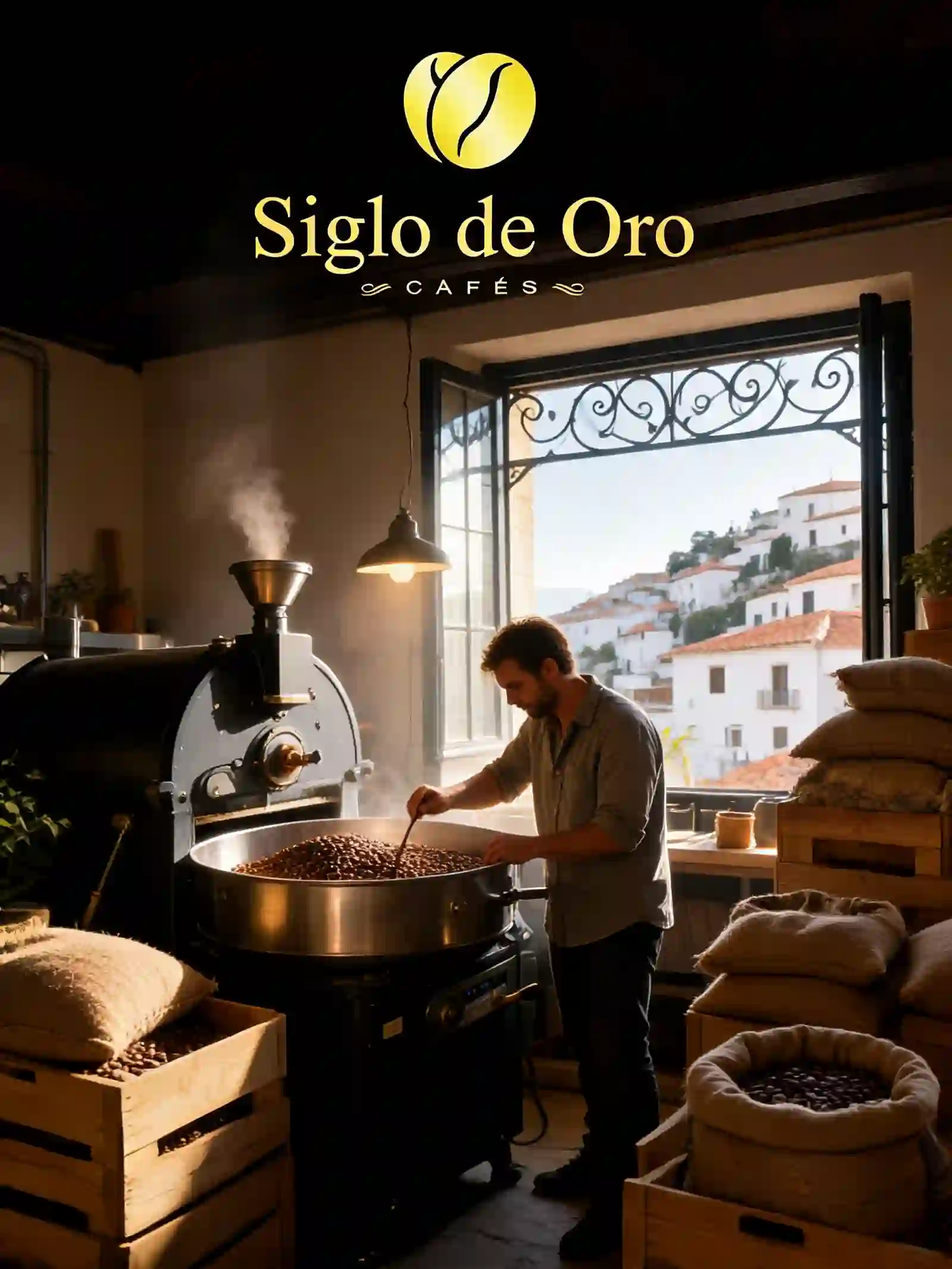
Green coffee does not taste of coffee: it tastes of grass. Everything else is built by the roast, and it happens in about twelve minutes marked by two cracks that decide the outcome.
Green coffee doesn't taste of coffee
An unroasted bean smells of grass and raw peas, and chewed it tastes astringent. None of what we associate with coffee — the aroma, the sweetness, the bitterness, the body — is there yet.
All of it is built during roasting, in a process lasting 10 to 15 minutes in which more than eight hundred aromatic compounds are generated that didn't previously exist.
The three stages
1 · Drying. The bean enters at 10-12 % moisture and that has to go before anything else can happen. It takes roughly half the total time. The bean turns from green to yellow and smells of bread or boiled rice.
2 · Maillard and caramelisation. This is where coffee proper begins. Sugars and amino acids react with each other, generating hundreds of new compounds: it's the same reaction that browns bread crust or a seared steak. The bean turns brown and starts to smell like coffee.
3 · Development. After first crack, the time the bean is given before being dropped. This is the stage that decides whether the coffee will have marked acidity or heavy body.
The two cracks
A roaster works largely by ear, and two landmarks structure the whole process:
First crack. At around 196-205 °C bean temperature, internal pressure from steam and CO₂ bursts the cellular structure with a dry snap, rather like popcorn. From here the coffee is drinkable. Dropping it just afterwards gives a very light roast.
Second crack. At around 224-230 °C, sharper and more continuous, like puffed rice cereal. It's the bean's structure breaking a second time and the oils migrating to the surface. Past this point you're into dark roast, and the character of the origin disappears beneath the flavour of the roast itself.
Every interesting profile lives between first and second crack. What a roaster does is decide exactly where along that journey to stop, and at what pace to get there.
The three levels, honestly
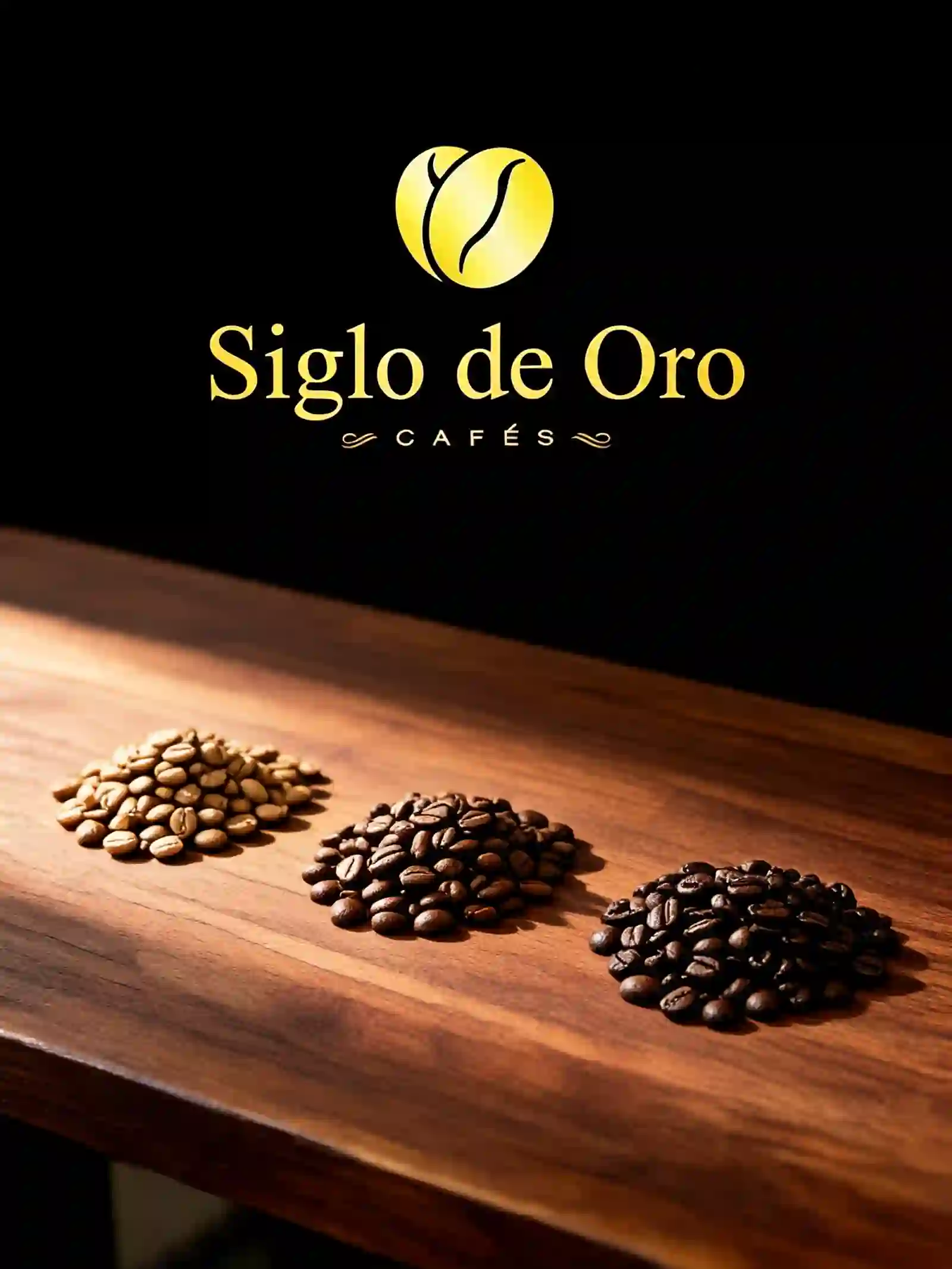
| Light | Medium | Dark | |
|---|---|---|---|
| Acidity | High | Medium | Low or none |
| Body | Light | Medium | High |
| Origin | Very present | Present | Masked |
| Notes | Floral, citrus, fruit | Caramel, nuts | Cocoa, wood, spice |
| Best for | Filter | Everything | Espresso, with milk |
None is superior. Light roast shows the origin but demands far more precision in brewing; dark forgives mistakes and stands up to milk, at the cost of every coffee starting to taste like every other.
Why Spain roasts so dark
There's a historical explanation. Spanish coffee culture was built on cheap coffee, often robusta, in an era with no traceability or quality control at origin. With that raw material, dark roasting wasn't an aesthetic choice: it was how you evened things out and covered defects.
Added to that was torrefacto, which involves adding sugar during roasting — up to 15 % of the weight of the green coffee — and which began as a preservation method when vacuum packing didn't exist. It stuck out of habit long after it stopped making technical sense.
The Spanish palate is therefore trained on bitterness and body. Which is why a light roast tastes "weak" to many people at first: it isn't lacking strength, it's lacking what they were used to finding.
Roast level changes how you should brew
A practical consequence that rarely gets mentioned: the darker the roast, the more soluble and more fragile the bean.
- Dark roast — extracts very easily. Use cooler water, around 88-91 °C, or it'll turn bitter.
- Light roast — denser and more closed. It needs water at 94-96 °C and a slightly finer grind.
Matching temperature to roast is one of the changes that shows most and that fewest people make.
Our approach
We work in medium and medium-dark roasts: enough for espresso to have body and crema and to hold up against milk, without reaching the point where the origin stops being distinguishable.
To see how the result is assessed, there's the cupping article, and to identify the aromas each level generates, the tasting notes guide. And if roast level interests you because you want a less acidic cup, it's developed in low acidity coffee. Freshly roasted coffee is in the shop.