A real roast date, checkable traceability and valve packaging: this is what separates genuine specialty coffee from a pretty bag, and why ours checks every box without us having to tell you so.
Buying specialty coffee online: what the label means (and what it doesn't)
"Specialty coffee" isn't a protected phrase. Anyone can print it on a bag, and plenty of brands do it over coffee that doesn't come close. The real definition has two parts: a cupping score above 80 out of 100, and traceability back to a specific origin — farm, cooperative, or at least region, not "blend of several countries".
Before you buy specialty whole bean coffee anywhere, there are four things you can check yourself, without taking anyone's word for it:
- Roast date, not best-before date. If only the second one appears, something is being hidden.
- A specific origin, country at the very least, region or farm even better.
- The declared species. If it doesn't say 100% arabica, it probably contains robusta and won't be advertising it.
- Valve packaging, which lets the CO₂ from recent roasting escape without letting oxygen in.
Our bags and capsules have all four. Not because it's an extraordinary achievement, but because it's the minimum you should expect from anyone selling specialty coffee online who would rather you check for yourself than take their word for it.
Natural, not torrefacto: the difference that doesn't show in the price but does in the body
Spain has a particular tradition that survives in few other places: torrefacto, coffee roasted with added sugar until it caramelises and forms a dark coating on the bean. It became popular for price and shelf life, not flavour — burnt sugar masks defects and extends time on the shelf. The trade-off is an aggressive bitterness and a flat acidity that have little to do with what the bean itself gives.
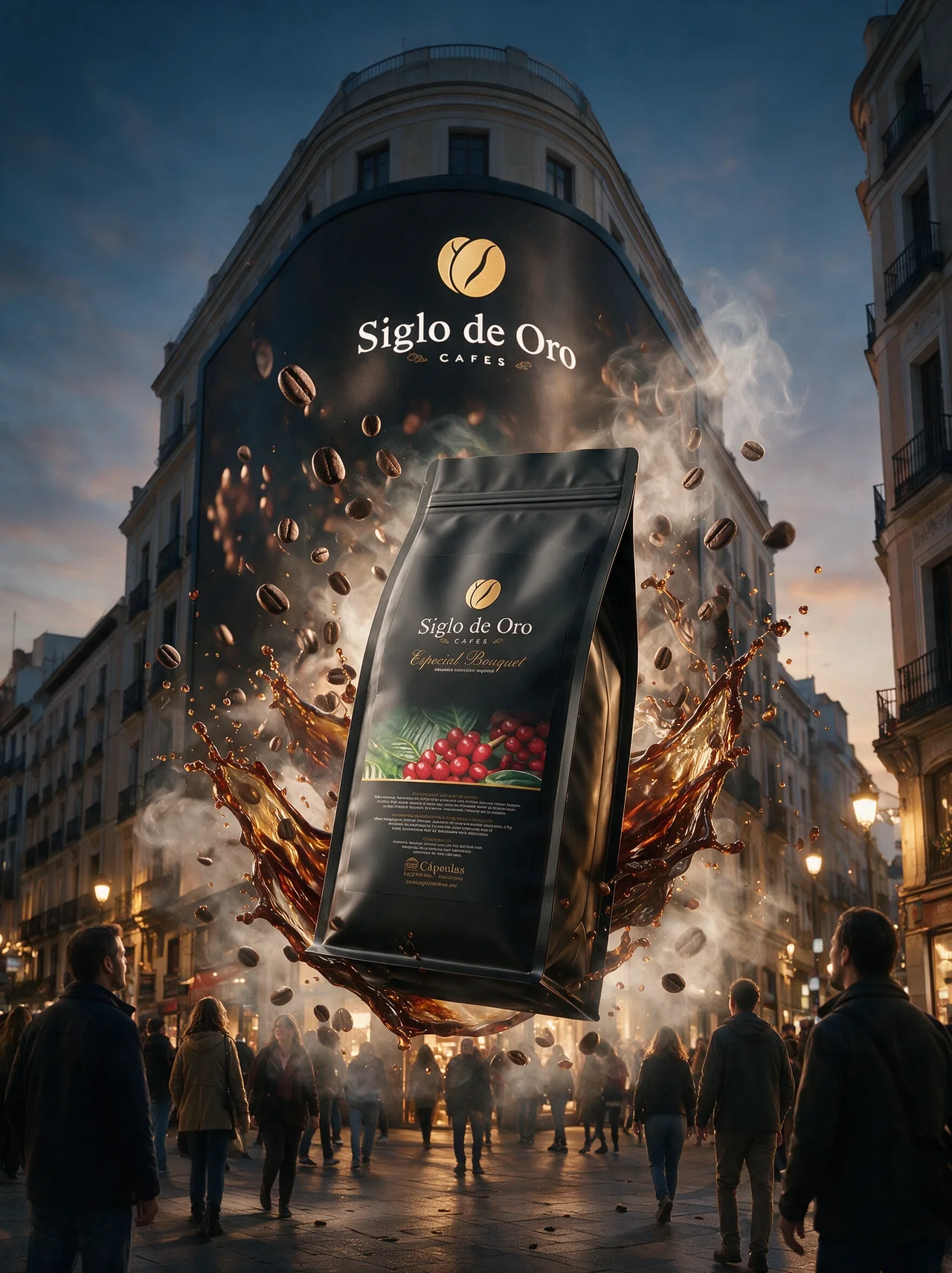
Our coffee is 100% natural, with no sugar or additives in the roast. It shows especially in Essenza, our 100% arabica, naturally processed whole bean coffee: real sweetness from the bean itself, without the artificial bitterness torrefacto leaves behind. And on the Especial Bouquet blend we say it plainly on the label — no additives, no preservatives.
If you've tried several whole bean coffees and they all tasted similar and slightly burnt, you may never have tried truly natural coffee. It's worth comparing before assuming that's simply what coffee tastes like.
The Almería Method: why we call it that and what it means in practice
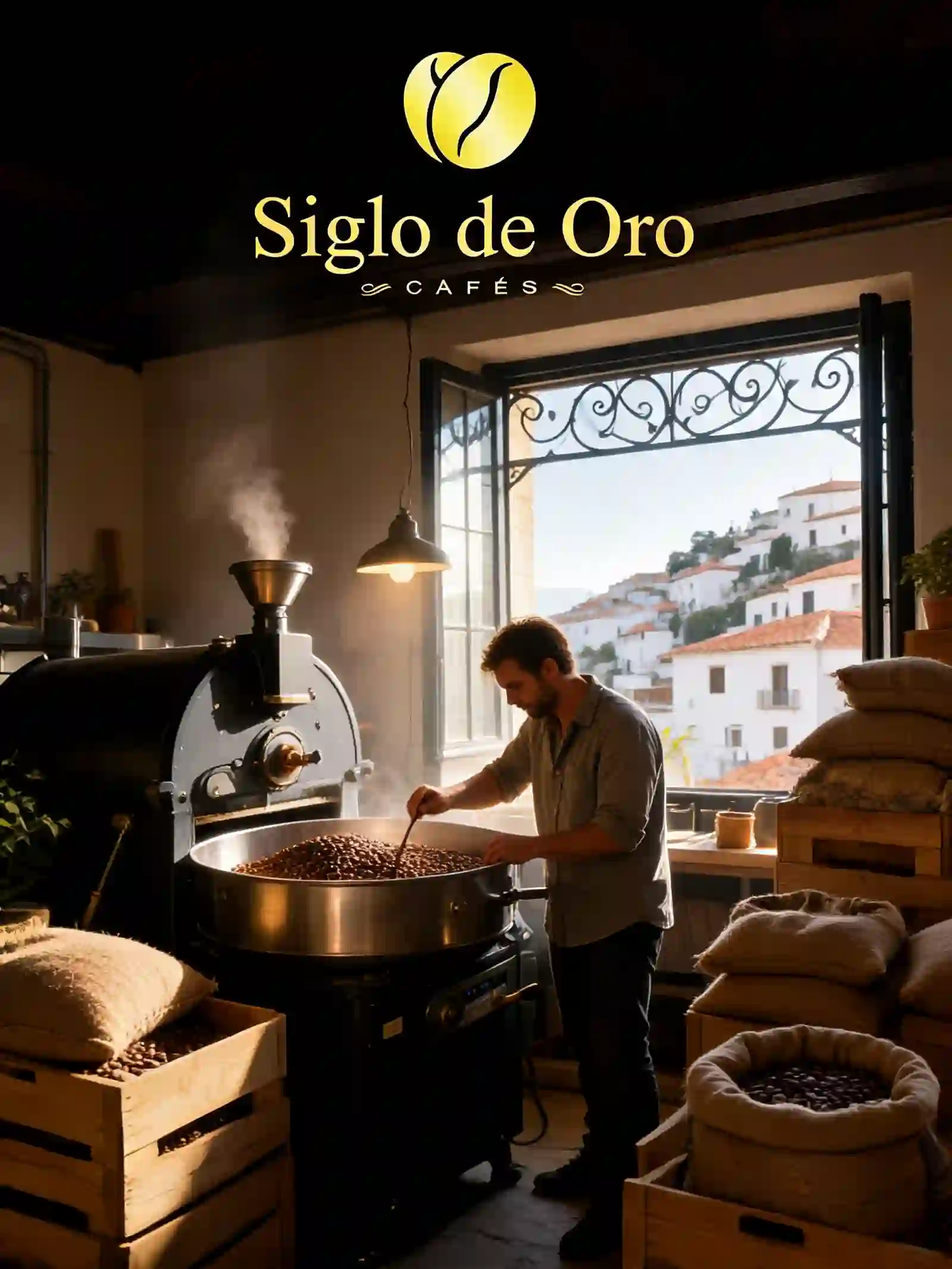
We roast in Aguadulce, Almería, and follow the same process on every batch — we call it the Almería Method because that's exactly what it is, a method, not a marketing promise: Cleanliness, Slowness and Traceability.
- Cleanliness — hand-sorting the beans before roasting, removing defects that an industrial roast simply hides by raising the temperature.
- Slowness — slow, controlled roasting, with no rush to move on to the next batch. It's the only way to develop sugars without burning them.
- Traceability — cupping before packaging, and an identified origin on every bag, not "blend of several countries" with no further detail.
It's why we can be called a coffee roaster in Almería and not just a shop: green beans come in one door and roasted coffee goes out the next, with no middle steps and no months sitting in a warehouse. You can see the rest of what we do on our specialty coffee in Almería page.
Why a recent roast matters more than the name on the bag
Coffee starts losing aroma the moment it leaves the roaster. After 3-4 weeks, the CO₂ that protected the bean has mostly dissipated, leaving a flat cup even if the origin and roast were excellent. That's why buying freshly roasted coffee isn't an enthusiast's whim: it's the variable that changes the cup the most, more than origin or even brewing method.
We roast to order in small batches and ship within 24-72h, in valve bags we let do their job before sealing. The roast date is printed, not the best-before date — so you always know exactly how long your freshly roasted whole bean coffee has been waiting, whichever format: beans, ground or capsules.
Beans, ground or capsules: what to order for your machine
There's no single best format, only the best format for your machine. The variable that actually matters is the grind:
| Machine | Grind | Recommended format |
|---|---|---|
| Espresso / moka pot | Fine | Whole bean, ground right before |
| Bean-to-cup / super-automatic | Medium-fine | Whole bean (required) |
| V60 / Chemex / filter | Medium | Whole bean or ground to order |
| French press | Coarse | Whole bean, coarse grind |
| Compatible capsule | — | Capsule, grind already done |
If you own a grinder, buying whole bean coffee online and grinding it right before brewing is what makes the biggest difference in the cup — we go into more detail in ground vs whole bean. If you don't have a grinder or would rather keep it simple, freshly roasted specialty ground coffee is still miles ahead of any supermarket ground coffee, whether you're using a bean-to-cup machine, a moka pot, or anything else.
And if your machine is a Nespresso® Original Line, specialty compatible capsules — with real arabica and a roast date, not just "intensity 10" — are the option with no filter and no grinder. We cover how to tell them apart from capsules that only look the part in our compatible capsules buying guide, including natural decaf for anyone who wants the ritual without the caffeine.
Colombia, single origin: why knowing where it comes from matters
One of our origins is Colombia, with a light-medium roast that preserves the bright acidity and fruity notes typical of its highlands. It's probably the best-known origin, and the one that best explains why the same name — "arabica" — can taste radically different depending on where the bean comes from. We go into it more calmly in our article on Colombian origin, if you want to understand what makes a Colombian whole bean coffee taste different from a generic blend.
We're not the ones providing the proof
Anyone can write "the best whole bean coffee" on their own website. What they can't do is fabricate real people's Google reviews:
"Café Siglo de Oro is one of the best coffees I have tried. Freshly roasted, very good quality at an affordable price, with a personal touch from Sebastián." — Juan José Ramos Villalobos
"You notice the quality from the first moment: good aroma, balanced flavour and a well-cared-for product." — Andrés Linares Mihi
You can read the rest in the verified Google reviews shown on the site itself, unfiltered and not cherry-picked down to five stars only.
Does coffee cause headaches or relieve them? Both, depending on the case
Caffeine is a mild vasoconstrictor, which is why it appears as an ingredient in some over-the-counter migraine painkillers — that's not a myth, it's the real pharmacological reason. It's why many people feel relief from a coffee when a headache starts, especially if it means some extra caffeine on top of their usual intake.
The opposite effect is more common than it seems: if you drink coffee every day and one day it's delayed or skipped, your body produces a withdrawal headache as the receptors caffeine had been blocking get freed up. It isn't the coffee that "causes" the headache — it's the irregularity. We explain the full mechanism in our article on caffeine. This isn't medical advice: if headaches are frequent or intense, that's a conversation for a doctor, not a bag of coffee.
For hospitality, offices and hotels: the same coffee, a different volume
Everything above — recent roast, traceability, valve packaging — matters just as much whether you're buying a kilo for home or you're the coffee supplier who has to keep the quality consistent for an entire bar, hotel or office. The difference is in the volume, the logistics and the account handling, not the coffee: the same artisan roast from Almería, with pricing and formats suited to professional consumption. We cover how to choose a coffee supplier for hospitality in Almería and what quality office coffee is really worth in our article on coffee at the office.
How to buy it
If you're after specialty whole bean coffee, ground coffee or compatible capsules with a real roast date and a checkable origin, it's all in the shop. And if your consumption is steady, the monthly subscription takes care of the boring part — never running out, always freshly roasted — without you having to remember to reorder.