Three simple rules explain almost every pairing that works — and why an over-sweet dessert ruins a coffee that was doing fine. Including the Spanish classics that actually fit.
Three rules and that's it
Pairing sounds like an occult science and really comes down to three principles you can apply knowing nothing about coffee.
1 · Match the intensity. The rule most often broken. If one of the two flattens the other, there's no pairing: there's one flavour and another that disappeared. A delicate floral coffee alongside an intense chocolate tart is time wasted on the coffee.
2 · Complement or contrast, but decide which. Complementing means joining like to like: a coffee with cocoa notes next to dark chocolate, and both reinforce each other. Contrasting means opposing: a bright, citrusy coffee against something fatty and sweet, each lifting the other. Both routes work; mixing them without intent doesn't.
3 · Acidity cuts fat. This is the mechanism behind half the classic pairings, in coffee as in wine. A coffee with clean acidity refreshes the palate after something buttery, and that's exactly why coffee with pastry works so well.
Chocolate
The most rewarding pairing, because coffee and cacao share an aromatic family by origin — both are fermented, roasted seeds.
- Dark chocolate 70 %+ → a coffee with body and cocoa notes, a medium-roast blend. They amplify each other.
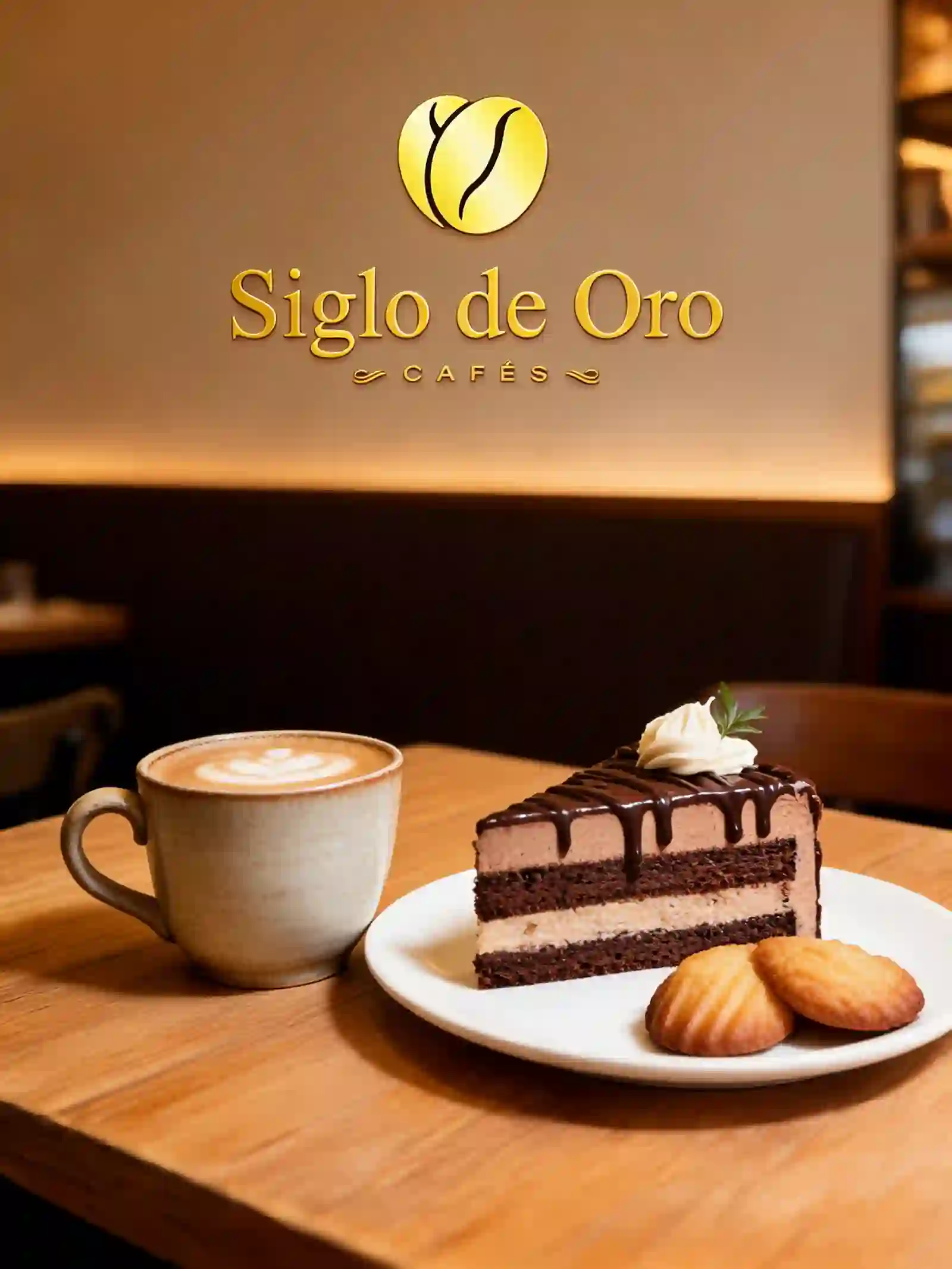
- Milk chocolate → a coffee with acidity, such as a Colombian single origin. The acidity cuts the dairy sweetness and stops it cloying.
- White chocolate → you need marked acidity, or the whole thing turns sickly.
Cheese
It sounds odd in Spain and is routine in northern Europe. It works on the fat rule.
Aged sheep's or cow's cheese, with its nutty notes, goes very well with a medium-roast espresso. Creamy cheeses want a filter coffee with acidity to cut through the fat. With blues you need a very powerful coffee, or it vanishes.
Pastry and baked goods
The European classic — a cortado with a croissant — works on pure mechanics: butter needs something to cut it, and coffee does that.
- Croissants and puff pastry → cortado or cappuccino. The milk softens, the coffee cleans.
- Carrot cake and spiced bakes → a medium-roast blend, whose caramel notes link to the cinnamon and ginger.
- Citrus or red-fruit desserts → a single origin with acidity. They complement rather than fight.
- Very sweet desserts → an intense coffee, no sugar, ideally black. Here the coffee acts as counterweight.
The Spanish classics
Since this subject is nearly always written around French patisserie, here's the local version — useful if you live in Spain:
Churros with chocolate. The chocolate is already the drink; coffee alongside is either redundant or competing. If anything, a short espresso afterwards, not during.
Turrón de Jijona. Almond and honey want a coffee with body and nutty notes. It's one of the best Christmas pairings there is and badly underused.
Toast with olive oil. Extra virgin olive oil brings its own bitterness and pepper. It needs a coffee with enough sweetness not to pile bitterness on bitterness: medium roast, never very dark.
Mantecados and polvorones. Very rich and very dry: a coffee with acidity and some milk.
A note on sugar
If you're going to pair, try the coffee without sugar at least for the first sip. Sugar flattens the acidity and the natural sweetness of the coffee, which are precisely the two elements that make a pairing work.
It isn't purism: with sugar nearly all coffees taste alike, and at that point it hardly matters what you drink them with.
How to do it at home
Take two different coffees and two or three things to eat alongside. Try each coffee on its own first, fix it in mind, then with each accompaniment. You'll see immediately which one gets muted and which gets lifted.
It's the same comparative principle we explain in the article on cupping, and to name what you perceive, the tasting notes guide. A blend and a single origin to start with are in the shop.