Before buying compatible capsules there are three things to know: whether your machine takes them, what the intensity number actually means, and why the cheapest ones work out expensive.
First: check your machine takes them
This is the error that causes the most returns. Nespresso® has two mutually incompatible systems:
- Original line — Essenza, Inissia, Pixie, CitiZ, Lattissima, Creatista, Le Cube. A truncated-cone capsule, pierced from above, working on pressure. It takes third-party compatibles.
- Vertuo line — a larger circular capsule with a barcode printed round the rim that the machine reads to set rotation and volume. It takes no compatibles, because without that code the machine simply won't start.
If your machine's name includes "Vertuo", no compatible capsule on the market will work. If it doesn't, it's almost certainly Original and you can buy compatibles without concern.
The intensity number doesn't mean what you think
Every box carries a number from 1 to 13, and many people read it as caffeine content. It isn't.
Intensity is a commercial scale, not a standardised one: each brand calculates it its own way, mixing roast level, body and perceived bitterness. A 10 from one brand can be milder than an 8 from another. And as for caffeine, the relationship is close to the opposite of what the number suggests: very dark roasting (which raises "intensity") slightly degrades caffeine, while a medium roast with more robusta can carry considerably more.
What the number does indicate, roughly and only within a single brand, is how much roast and how much bitterness you'll find. Nothing more.
Why the cheapest capsules work out expensive
There are compatibles at €0.15 a unit and compatibles at €0.70. That gap isn't greed: it's what's inside.
To reach the lowest prices something has to be cut, and it's always the same things: commercial-grade robusta instead of arabica, very dark roasts that hide bean defects, coffee encapsulated months after roasting, and plastic seals with a poor barrier. Each of those is invisible on the box and perfectly audible in the cup.
Comparing a specialty compatible with the cheapest one in the supermarket isn't comparing prices: it's comparing two different products that happen to fit the same slot.
The useful comparison is between capsules in the same category. Within specialty encapsulated coffee, the sensible range runs from €0.50 to €0.80 a unit, and there it does make sense to weigh price, origin and date.
What to check on the box before paying
- Roast date, not best-before. The shelf life of a sealed capsule is years and tells you nothing. What matters is when the coffee was roasted.
- A specific origin. Country at minimum; region or farm, better. "A blend of coffees from various origins" means they'd rather not say.
- Species. If it says 100 % arabica, at least you know where you stand. If it doesn't, assume there's robusta in it.
- Material. Aluminium preserves considerably better than plastic. If it's plastic, buy in smaller quantities.
- Box size. A hundred capsules is better value, but if you drink two a day that's nearly two months. Match the purchase to your actual rate, not to the discount.
Recycling: where things stand in Spain
A used capsule is aluminium or plastic with wet coffee inside, and that combination is precisely what complicates recycling. Dropping it in the yellow bin unemptied rarely ends well.
The options that genuinely work are three: brand-specific collection points, emptying the capsule and separating metal from grounds (laborious but effective), or compostable capsules, which in exchange usually preserve aroma less well. There's no perfect option; it's worth choosing with the trade-off in view.
How many capsules you need a month
A quick sum that prevents buying badly: multiply the coffees you drink a day by 30. Two a day is 60 capsules a month; three, 90. If you live as a couple and you both drink two, you're at 120.
That number tells you the format: below 60 a month, small boxes and one-off purchases; above that, the large format or a subscription pays off, mainly because it avoids the month they run out on a Tuesday night.
Our compatibles
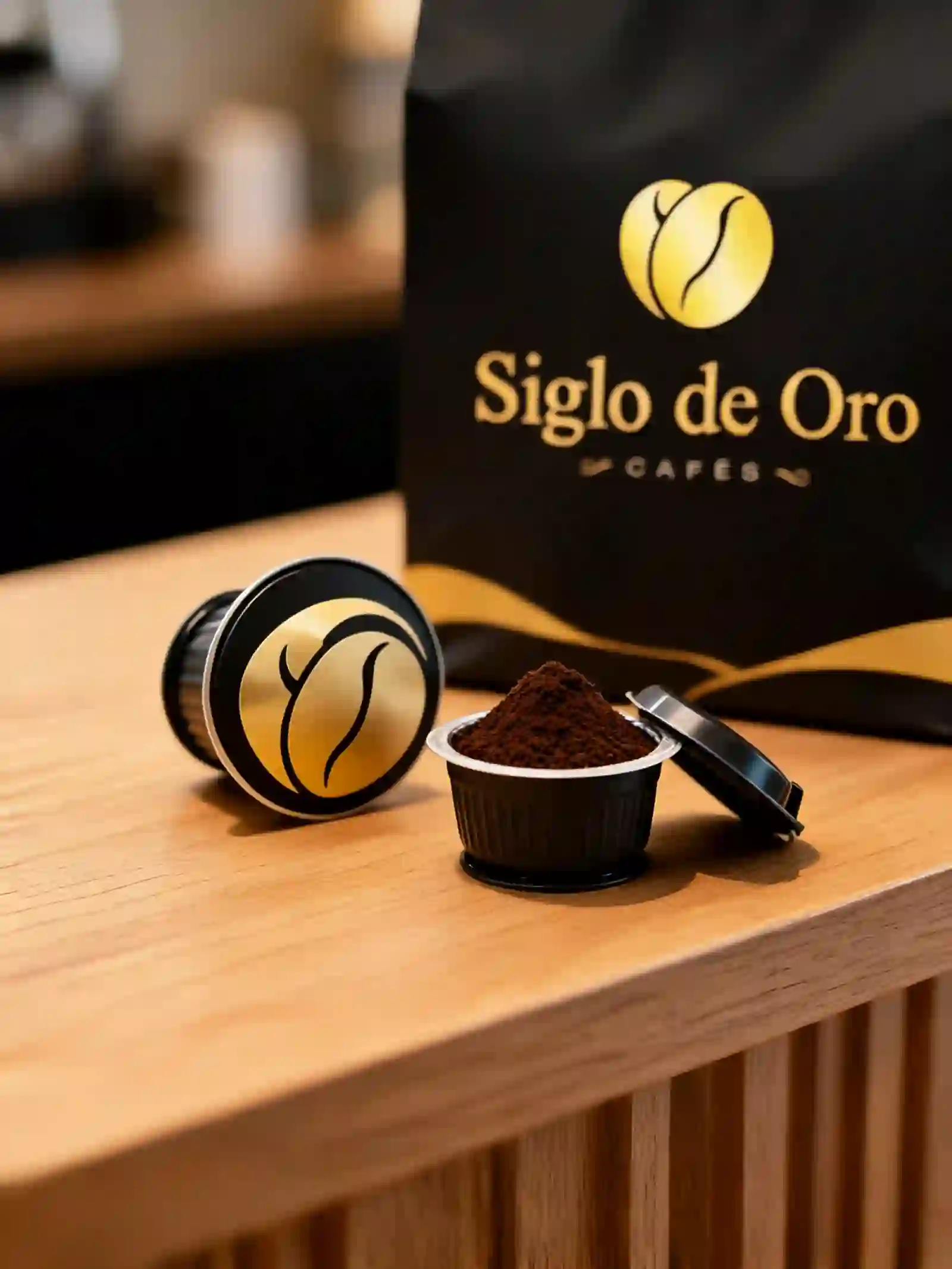
We encapsulate Especial Bouquet and Natural Decaf a few days after roasting them in Almería, in boxes of 100 and compatible with the whole Nespresso® Original line. They're in the shop, and if your consumption is regular, the capsule plans work out slightly better and guarantee they arrive freshly encapsulated.
If you want the detail on what changes between industrial and artisan encapsulating, we develop it in this article. And if you don't have a machine yet, see the machine loan programme.