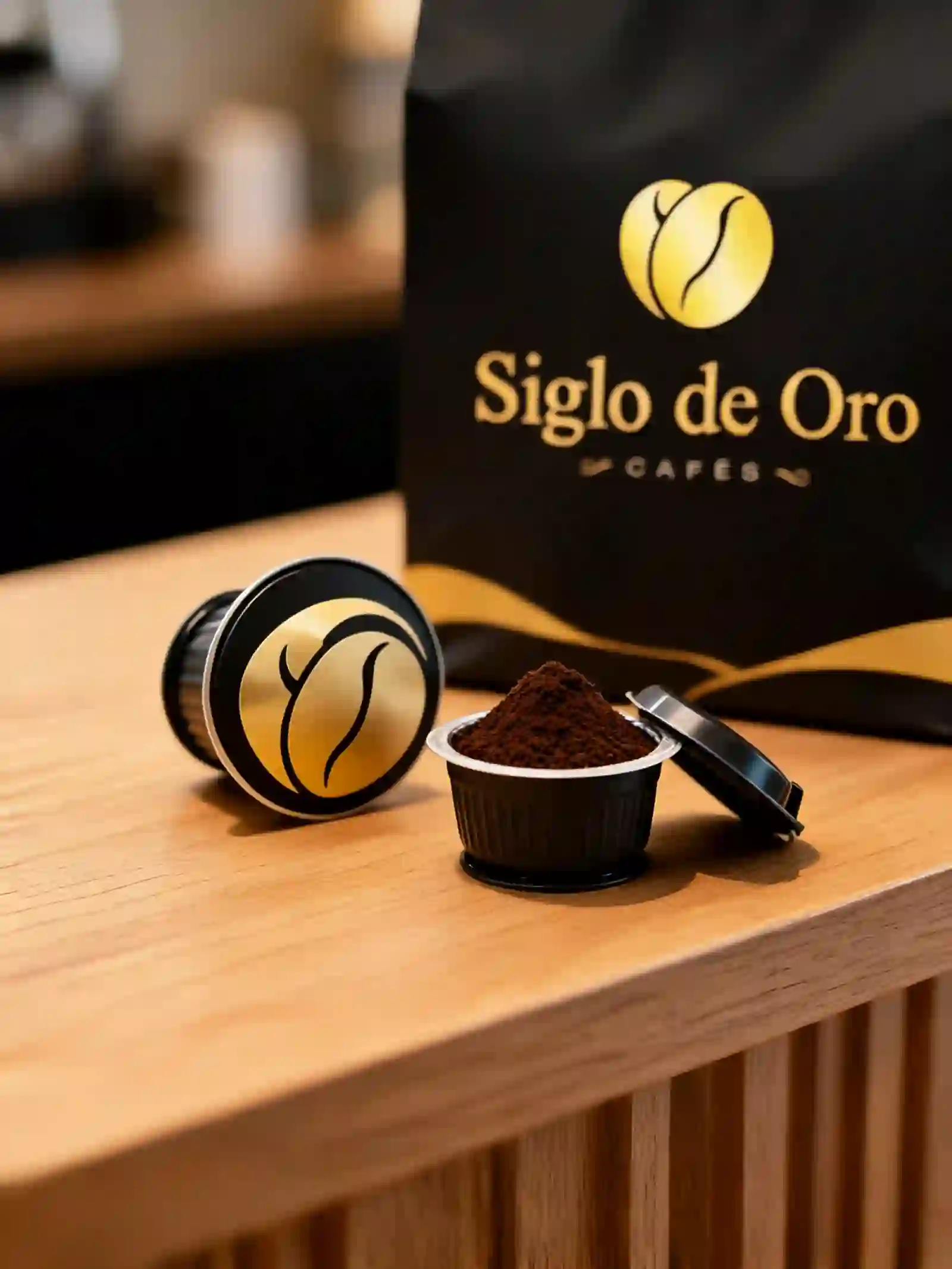
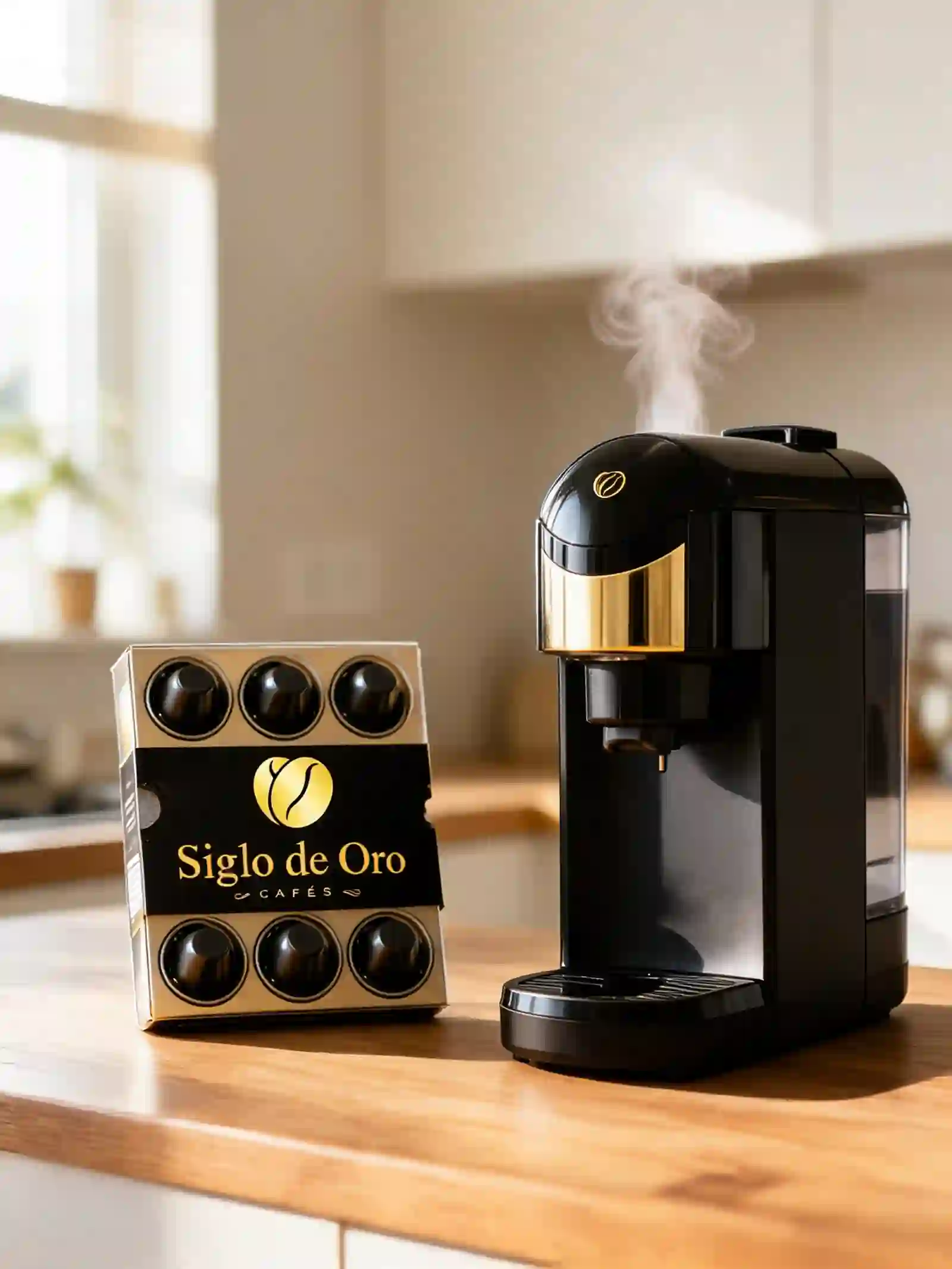
Encapsulating coffee well is harder than it looks: 5 grams, 19 bar and an oxygen barrier. What genuinely changes between an industrial capsule and an artisan one — including what the industrial one does better.
Why encapsulating coffee well is hard
A capsule holds between 5 and 6 grams of very finely ground coffee, and the machine pushes water through it at around 19 bar for 25 to 30 seconds. It's a fast, high-pressure extraction with very little margin: any flaw in the coffee is amplified in the cup rather than diluted, as it would be in a French press.
On top of that sits the preservation problem. Ground coffee loses aroma within hours, so a capsule only works if the packaging acts as a genuine oxygen barrier. That's where most of the game is played.
What's inside an industrial capsule
Large-scale industry works under two constraints: volume and stability. The capsule you buy in March has to taste like the one from November, and the unit cost has to allow margins at a scale of millions.
That pushes towards blends with high robusta content, dark roasts that even out differences between lots, and long gaps between roasting and encapsulating. The result is a very consistent coffee, with predictable body and bitterness, but not much aromatic range.
What the industry does better (and it's worth admitting)
Here it's only fair to be even-handed, because the artisan pitch usually skips this part.
The big brands have quality control and sealing technology a small roaster can't easily match: modified atmosphere, humidity controlled to the gram, very tight grind tolerances. Their capsule is predictable to the point where you can order the same reference for years and notice no difference.
The industrial capsule wins on consistency. The artisan one wins on freshness and character. Choosing means deciding which of the two matters more to you.
A small roaster works with different lots, different harvests and therefore cups that vary somewhat between orders. For plenty of people that's precisely the appeal; for anyone who wants exactly the same thing every morning, it can be a drawback. Worth knowing before you buy.
What changes in an artisan capsule
The decisive difference is the time between roasting and encapsulating. When that gap is measured in days rather than months, the coffee still holds the volatile compounds that go first: the floral, fruity and caramel end. With an old roast those compounds are gone, and what remains is the bitter skeleton of the coffee.
The other factor is where the bean starts. If the coffee being encapsulated is the same one sold as whole bean and can stand being cupped on its own, the starting point differs from a blend designed to disappear behind the roast.
Aluminium, plastic and why it matters
Aluminium is a near-total barrier against oxygen, light and moisture. Plastic lets oxygen through slowly, even with barrier layers. In a capsule that will sit in a cupboard for months, that difference shows.
On recycling, aluminium is indefinitely recyclable without losing its properties, but there's a practical catch: a used capsule has coffee inside, and that complicates the process. The systems that genuinely work are the ones that collect the whole capsule and separate coffee from metal at a plant. Dropping it in the recycling bin as-is is no guarantee it gets recycled.
What each option actually costs
Decisions are easier with numbers on the table. A specialty capsule runs at around €0.65 a unit. A kilo of whole bean at €30.99 gives roughly 125 doses of 8-gram espresso, which is about €0.25 a cup.
Put plainly: grinding your own works out two to three times cheaper per cup. What a capsule buys you is time, no cleaning and no learning curve. That's a perfectly reasonable trade, but it is a trade, and it's worth having in view rather than having it sold to you as though it doesn't exist.
Our capsules
We encapsulate the Especial Bouquet blend and the Natural Decaf a few days after roasting, compatible with the Nespresso® Original line. Boxes hold 100 units and keep well for several months stored somewhere cool, dry and out of direct light — more important than it sounds if you live somewhere warm, as we explain in the storage guide.
If you're comparing brands, the buying guide for compatibles covers what to look for on the label. If your consumption is steady, a subscription solves the problem of running out. And if you don't have a machine yet, the machine loan programme removes the barrier to entry. Everything is in the shop.