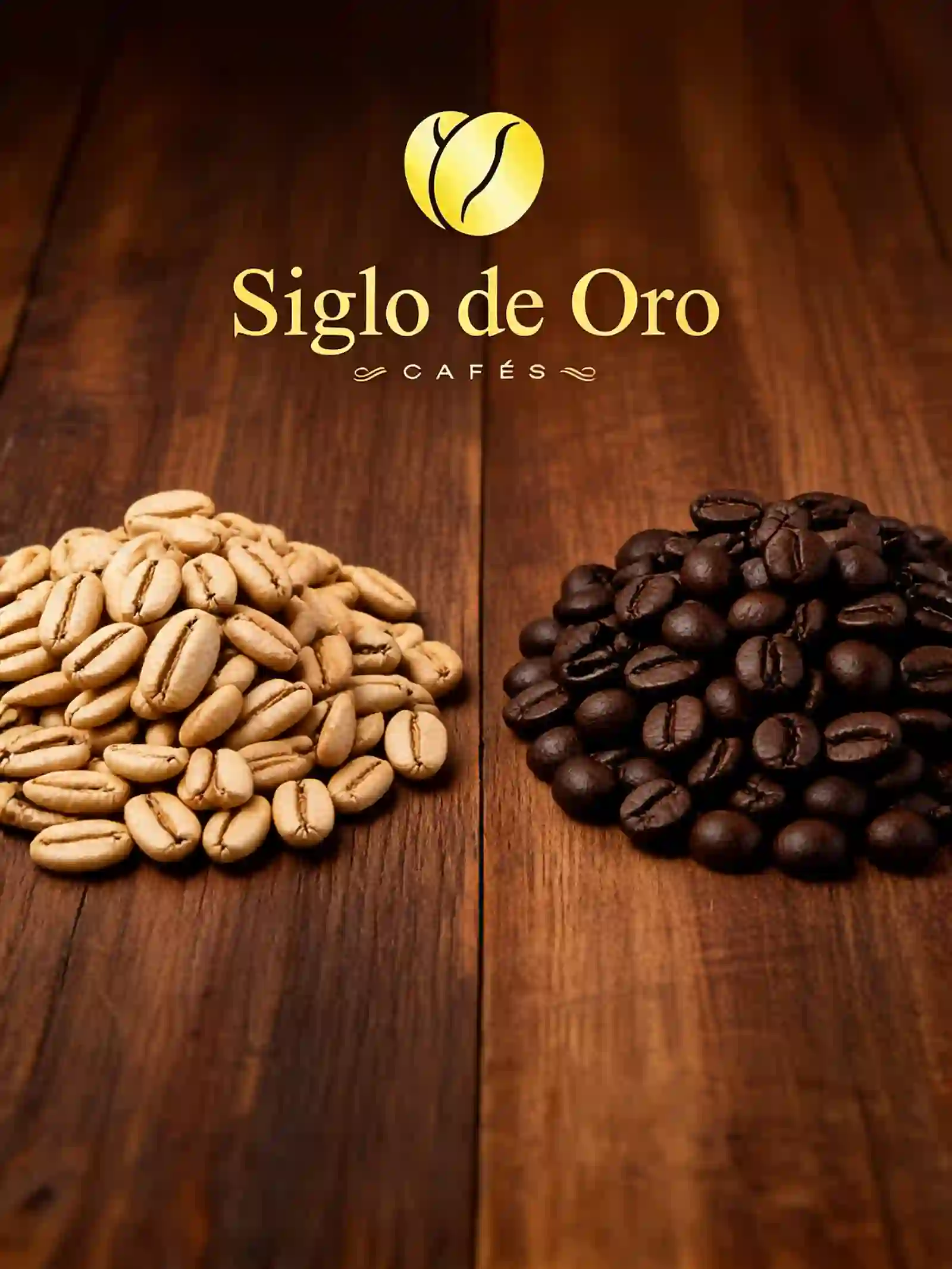
Single origin sounds more craft and blends carry a reputation for cheap filler. In reality a good blend is harder to make, and there are solid reasons to choose either.
What each one is
Single origin — coffee from one place: a farm, a cooperative or, more loosely, a region. The idea is that the cup reflects that specific place.
Blend — a mixture of coffees from different sources, combined by the roaster to achieve a particular profile.
The word "blend" carries a poor connotation in Spain that comes from somewhere else entirely: in supermarkets, "mezcla" usually means a mixture of natural and torrefacto coffee, which is a completely different thing and genuinely is a problem. A specialty blend has nothing to do with that.
Why blends exist
There are three legitimate reasons, and none of them is cutting costs:
Consistency. A single origin changes from one harvest to the next: the same coffee from the same producer doesn't taste the same this year as last. For a café serving the same espresso every day, or for anyone who wants their usual bag to taste like their usual bag, that variation is a problem. A blend is reformulated harvest by harvest precisely so the result doesn't change.
Filling gaps. Very few coffees have everything. One brings sweetness and body but lacks sparkle; another has bright acidity but falls short on body. Combined, they give something neither reached alone.
Standing up to milk. A delicate floral origin disappears under 150 ml of milk. Espresso blends are built with that in mind.
The paradox: the blend is harder
With a single origin, the roaster's job is largely not to spoil it: finding the roast curve that best expresses what's already in the bean.
With a blend you have to know how each component behaves on its own in the roaster, how they interact once combined, how each evolves in the days after roasting — they don't age alike — and what to substitute when one runs out or changes harvest.
A good blend isn't a good coffee cut with a bad one to save money. It's a construction that has to be rebuilt every time one of its components changes.
What single origin gives you
Real traceability. You know where it came from, who grew it and under what conditions. If you care where your money goes, the trail can be followed here.
Character. It's where the odd and interesting things appear: a Yirgacheffe that tastes of jasmine, an Ethiopian natural that tastes of strawberry. A balanced blend, by definition, files those extremes down.
Seasonality. Like wine: there are better and worse harvests, and the coffee changes through the year. For anyone who enjoys exploring, that's an advantage.
Which to choose
- Everyday espresso, especially with milk → blend. Consistency, body and stable crema.
- Filter, V60, drunk black → single origin. That's where its complexity shows.
- You want to learn to distinguish flavours → single origin, and two at a time to compare.
- You want your home coffee to taste the same every time → blend, without hesitation.
Plenty of people who've been at this a while keep both: a blend for everyday and a single origin for when there's time to brew properly. That isn't inconsistency, it's two different needs.
What we have
Our Especial Bouquet is a blend built for espresso and for holding up against milk. Our Colombia is single origin, and shows particularly well as filter.
If you want to know what to expect from each in the cup, the tasting notes guide helps put names to what you notice, and the espresso versus filter comparison explains why the same coffee tastes different by method. Both are in the shop.